
I’m Catching the VIBE*
Everything is Possimpible (with vibecoding)

🎧 00:00•၊၊||၊|။||||။၊|• 0:12 [Isamu’s Circle - Andy Mineo]
TL:DR: In 2 months, we’ve built 3 in-house plugins with AI. I’m also using AI in some of my side projects. It’s been a fun ride; sometimes impossibility is just a starting point for what’s actually possible. That spirit is at the heart of every AI project and experiment I’ve tackled lately.
Where It All Started
In a Physics lab session with our Belloved teacher, he proposed to the gang, Emeka, Akinbusola, Dapo, and a couple of us, that we build a quiz buzzer system. Imagine it: a bunch of secondary school students trying to build their own Family Feud-esque game system with only knowledge of switches, resistors, and capacitors.

Fast-forward to university, 3 years later, while learning about transistors and integrated circuits, it became apparent that all the ideas and diagrams we sketched then were fuelled by youthful enthusiasm. Some of my favourite memories in Uni involved making stuff: C++, when I wasn’t trying to pass a test by writing functional code on paper; on-site experience during Industrial Training; or a practical session on Embedded Systems.
That same restless energy carried me from an Engineering background to doing Creative work. If there’s one thread connecting my earliest engineering sketches, my time improvising media sets at Big Cabal, and the work I do today, it’s the determination to problem-solve, turning curiosity and raw materials into something real. It’s also how I met some of my best friends for life.
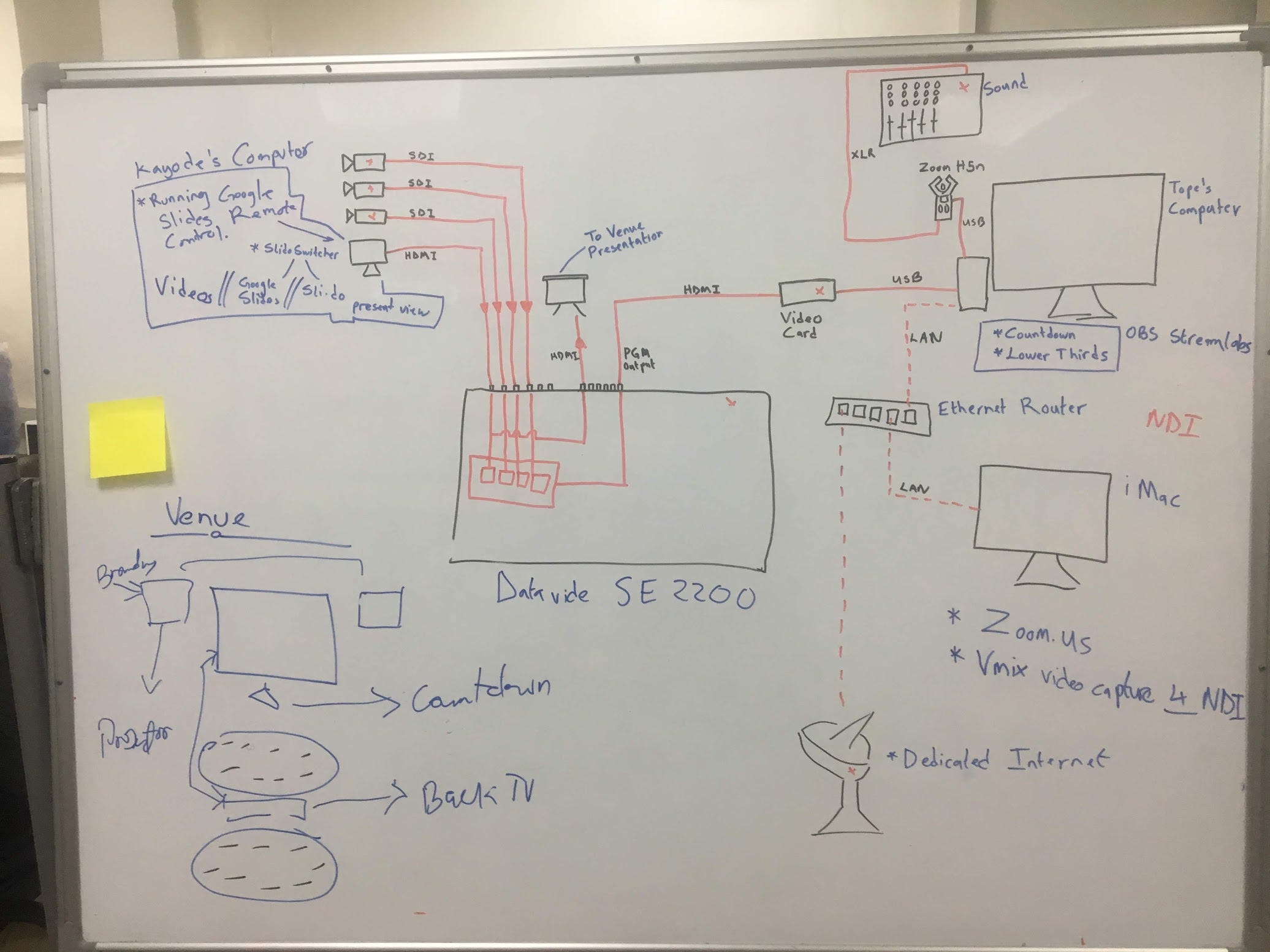
I imagine it could have been amusing or frustrating for my colleagues at Big Cabal Media when I began drawing sets for some of our complicated production ideas. The budget may not have existed then, but the idea to execute it was available.
DELIVRRR: The Idea That Got Away (and Didn’t)
To find the motivation for software-inspired building, we’ll need to go back just over a decade to Kojah.
As young creators, both starting out in our careers, he refused to pay for a video I shot and edited for him, even though I had incurred logistical costs. I was disappointed, but it led to an idea. DELIVRRR, a product I hoped to build to protect creators like me from bad behaviour.
The concept: The video producer uploads a video to the platform. Automatically, on the client’s preview, it appends a non-intrusive watermark, re-encodes at a low bitrate, and, à la Netflix, it uses software rendering to prevent screen recording. If the client was satisfied, they could click on the glossy “Make Payment” button to download the non-watermarked, high-resolution video. Voila!
I remember shopping this idea around to anyone I knew, every tech bro, to no avail. I understand why now, in that era of Nigeria’s tech ecosystem, no one was doing anything in creative technology, so it was no surprise that my idea sounded gibberish. Further west, in New York, in the same year and month that I had this idea, Emery Wells had just founded Frame.io.
For a decade, he worked on this idea of perfecting a platform for creative feedback; if he added a payment gateway to Frame.io, DELIVRRR would have been perfectly executed. I love the company, and it’s no surprise that Adobe paid over US$1 billion to acquire it. My love for post-acquisition Frame.io, however, needs a rain check.
‘Overnight, the rod of Aaron bloomed ‘ - Numbers 17:8 paraphrased.
With AI, suddenly it’s easier to fail or succeed quickly. I wonder how things would have turned out if I could have vibecoded a quick prototype for DELIVRRR, test it, and iterate on it before handing it off to a more resourceful team.
Now, DELIVRRR lives on my past; it solves a problem only for low-trust societies. There is no incentive for it on a global scale, but products pivot on user feedback; perhaps it deserved that chance.
This year, I built a prototype for “Seventh AiD”, Seventh AI Assistant Director, get it? 😉
7AD is an AI-powered platform that helps assistant directors or nimble, multifunctional creative teams execute productions from script to storyboarding and shoot planning. It’s also BYOK (Bring Your Own Key), so no one gets locked into a single provider/model. It’s the biggest thing I’m working on right now, and it maybe deserves its own dedicated post.
For now, let me tell you about the side missions I’ve been running in parallel.
2026: 9-5
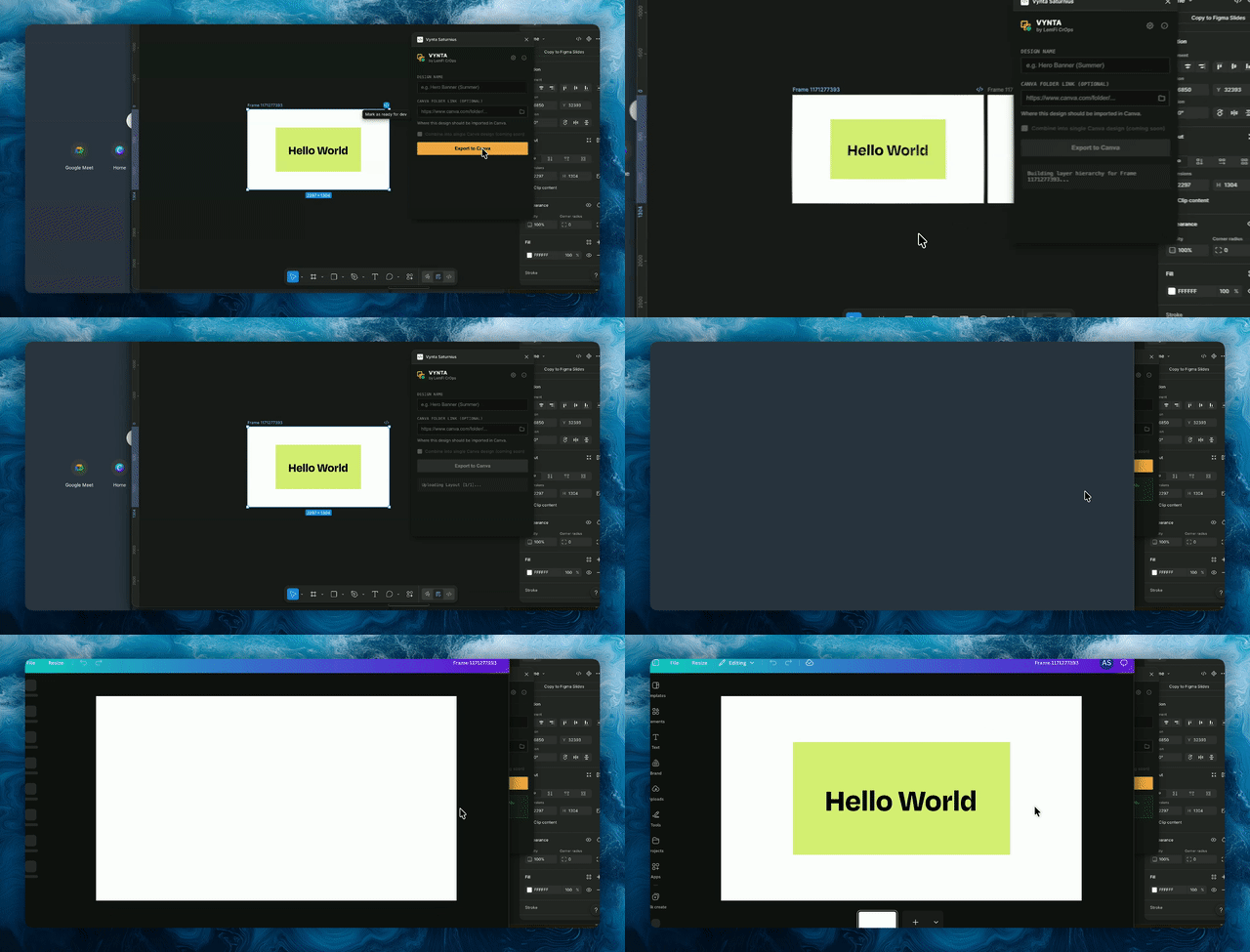
A few days ago, I shared something with my team: Vynta, a nifty plugin that bridges the gap between Figma and Canva. The name Vynta is made up; the problem it solves isn’t.
Marketing designers, for good reason, are better off working in professional design software like Figma, Photoshop, Illustrator, XD and, more recently, Affinity. In handing off to non-technical collaborators, however, depending on your creative team’s strategy, you could have your designers manage every little text and image change EVERY TIME. Or you could set up a system with an easier-to-use Canva that lets collaborators self-serve.
Everyone is happy, except the designer, who has to first design in Figma before transferring it to Canva. At times, this process feels like two connecting flights through airports within an hour, with unpacking, inspection, and repacking at both. This transfer takes about 15-20 minutes per design. Now with the Vynta MVP, that time drops to under 2 minutes, right from the Figma workspace, no need to even open Canva.
Suddenly, what used to be a tedious, repetitive chore becomes a quick handoff, and those extra 15-18 minutes per design add up fast: more headspace for creative work, less frustration over menial tasks, and faster delivery for the whole team.
The lesson I’d distil from building Vynta is the importance of reclaiming time. For me, it’s not about replacing creatives; it’s removing clerical work from their plate, giving them freedom to focus on true creative work. This is the real win
Into the CrOps-verse
J-Duplicator
Where it works
AfterEffects
Its story
You’re a motion designer.
You’ve made a lovely motion-graphics video in English; everyone likes it, but it now needs French and Portuguese versions, since your team supports a very global customer base.
You have to go into each nested composition, extract the text, then copy it to a document before sending it to a translator.
When you get the translations, you repeat the process. Duplicate the project for each language, open each nested composition to effect the translations, then render the video.
Of course, this is oversimplified, but for an average 1-minute product demo, it’ll take you approximately 2 hours of focused work for one language. Tick tock.
With J-Duplicator, we turned the chaos of manual localisation into a csv-driven symphony.
Plugin of Babel
Where it works
AfterEffects, Premiere Pro, possibly with an API upgrade
Its story
You’re working on a UGC video that needs to be subtitled.
There’s no mincing words, subtitling is annoying, if you care about doing it well. Play → Pause → Type, Scrobble ←, repeat 2-3 times for each 2/3 second interval of video.
Here’s something the Sheldon Cooper in you may say, “Why not use one of these auto-captioning software?” To which I’ll respond: we’re dealing with local-language UGCs (Twi, Yoruba, Igbo, Urdu, Swahili, etc.). All the major software supports English, French and the languages of the global North; there is no need to reinvent that wheel.
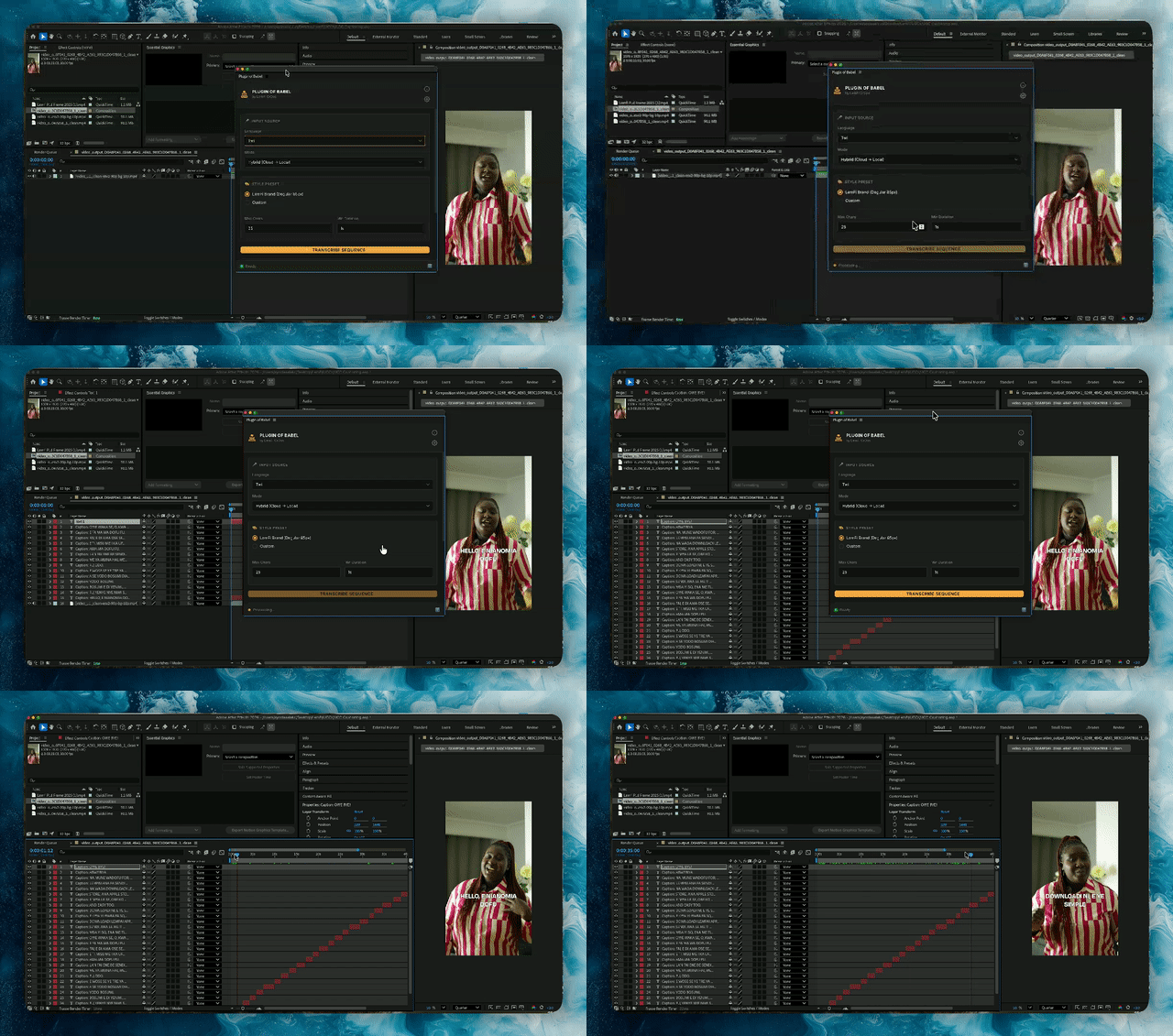
With the Plugin of Babel, in one click, the audio is sent to an LLM with support for a wide range of languages (currently whisper-large-v3), in our case.
See for yourself
J-Duplicator deserves its own article; that’s what I’m publishing next.
Before I tried my hand at Vynta, I had reached out to more experienced teams for help; there just wasn’t enough motivation for them. Eventually, I realised that sometimes, you just have to push through and build anyway.
5-9: Life as an Open-World Game
You Are NOT Dumb, You Just Lack the prerequisites
- https://lelouch.dev/blog/you-are-probably-not-dumb/
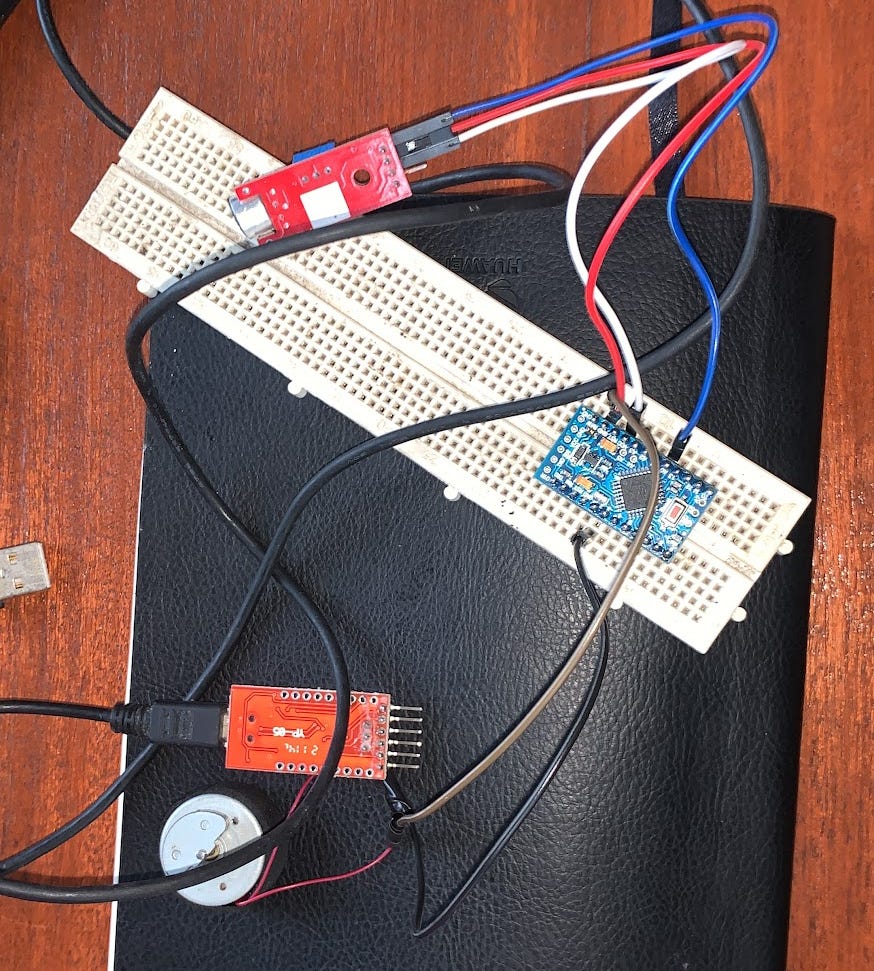
My friend Ayoade had me work on this really interesting, but simple, project: how do you alert someone who can’t hear sudden loud sounds? The solution: whenever a loud noise is nearby, the motor, functioning as a vibration module, alerts the wearer to their surroundings. I didn’t write any code for this one; I simply managed the final assembly and testing.
That Arduino board nudged me toward exploring new territory. A little while later, I picked up a Raspberry Pi 4, and now I own four Pis, all thanks to that initial spark with Ayoade’s project.
Although I initially used my Raspberry Pi to “manage and download Linux distributions”. However, as my use cases advanced, I began to develop valuable skills. Heck, I even hosted my wedding and personal portfolio website on one before migrating it to a VPS. I used to find Git confusing; now, through home-labbing, I’ve learned to appreciate the varying levels of genius behind Docker, UFW, SSH, Reverse proxying, Sandboxing, Tunnelling, and even .env environment variable files.
My most recent confusion now is navigating GitHub issues, spoiler alert: I’ll also figure it out.
These experiences would prove valuable in this “Catching the Vibe” journey.
For example, in building Vynta, I initially deployed the backend server on Vercel. It seemed perfect: fast setup, smooth deployment, what could possibly go wrong? Little did I know there was a 5MB ceiling waiting just ahead. During testing, I encountered a hard payload limit on data transfers, preventing the transfer of larger files. To get around this hurdle, I repackaged the backend for docker (docker-compose.yaml + Dockerfile), moved and deployed it to my VPS and continued testing without opening up port 3000 😁.
In pursuit of Personal or niche Market Fit (PnMF)
Before the design team at Google released AEUX, a side project. Any motion designer who needed to get product screens from Figma to AfterEffects would know what a hassle it was. A small team, albeit more experienced and in the pre-vibe-coding era, built a solution and shared it with the world. These are some of the use cases I see; it’s also a sentiment from the MKT1 session that inspired the introspection into my team’s processes. An era of building things based on personal needs/taste.
As someone who had a bad case of FOMO during the NFT era, I find the very doomsday-themed narratives around AI annoying.
“AI will take your job”
“Fire your motion designer”
“I’m building a Netflix killer”, etc.
The job boards of these AI and non-AI companies tell a different story.
Issa Rae shot a scrappy proof of concept in “The Misadventures of Awkward Black Girl”. To scale, she needed an actual production crew to bring “Insecure” to even more people.
“House of David” used AI for its visual effects; it was obvious in some scenes, and its use served the story.
Looking back, like our golden buzzer moment, a basic understanding of how transistors worked would have saved us a lot of head-scratching. A little foundation makes a world of difference for anyone eager to build. This is the advantage AI offers: A merger of your depth with a tireless generalist collaborator, an executor of monotonous tasks, and more. Treating it as a replacement for the human experience misses the point entirely.
Keep Building
Every plugin, every failed deployment, every time I had to re-set up my Raspberry Pi, every rabbit hole has taught me something I didn’t expect to know. Working on a project for my wife introduced me to using Pocketbase as a backend and CMS. I initially set up my portfolio website in TypeScript and had to run npm build for every small change. That’s the pattern: you start for one reason and end up somewhere more interesting.
More than skills, it’s genuinely fun. There’s something about shipping something that solves a real problem, no matter how small. You can make a case, fail fast, and succeed faster. And if the idea is ahead of its time? Well, you’ll at least know it works when the time catches up.
So... catch the vibe, start with simple things, and soon the impossible will become possimpible.1
Thank you for reading
Possimpible is not a typo, it is a reference from the TV Show, How I Met Your Mother.